When it comes to outdoor retail, it’s no longer enough to ‘buy local.’ It’s time to invest
In late May, as the first wave of tariff impacts seeped into the outdoor industry, the New York Times profiled two Vermont business owners, Carina Hamel and Robby Ringer of BIVO water bottles, who detailed how the erratic and weighty new tariffs had fundamentally changed the math of their business.
“I still feel super optimistic we can make it through this,” said Hamel to the Times, explaining how her company could only afford 8,000 of the 30,000 bottles in an incoming order because of the new costs. “But I think it’s going to be really freaking hard.”
A month later, as tariff implications widened, so did media coverage of outdoor gear makers. Cassie Abel of Wild Rye drew headlines as she made public her own struggles after facing a $1.2 million tariff bill on a $700k order. Abel got right to the point: “Personally, my house is on the line. The debt we’re taking on to cover tariffs will be nearly impossible to pay off under these new conditions."
And less than two weeks ago, one of my oldest friends in the outdoor world, Barry Barr of KAVU, pulled back the curtain on his own tariff challenges. “What we need to thrive is stability and not chaos,” Barry told the the New York Times. Though prior to that interview, Barry shared a darker picture with me directly: “We’re just trying to survive the increased tariffs and what the future looks like. There is going to be a lot of shake out and businesses going out of business in all sectors.”
As most are aware, tariffs are a fee charged to the maker of a product the moment it arrives in the United States. And when tariff levels go up or go down, so does the amount of fees charged on arriving shipments. Like a pebble thrown in a pond, every tariff adjustment has a ripple effect, adding a fresh layer of complexity for the manufacturer. And when dozens of pebbles are thrown? The overlapping ripples can make planning for the most basic business efforts a daunting task.
In early summer, most outdoor gear makers absorbed the new tariff costs in hopes that they’d somehow vanish by mid-summer. Yet as time has gone on, tariffs have risen and fallen (and risen again) but remained a fixture of our country’s trade policy. Understandably, to keep the lights on in their businesses, gear makers have started adjusting their prices and “passing along” some of the new costs to the next level of the supply chain – specialty outdoor retailers. And along with those passed down costs has come the very same passed down dilemma: raise prices to cover your costs and risk losing customers? Or hold the line and risk losing your business?
Because specialty outdoor retailers carry products from dozens if not hundreds of different gear manufacturers, these new price changes are coming from every conceivable direction, at different times and in different amounts. And they aren’t just being applied to new stuff that’ll get made next year or the year after, they’re also retroactively affecting things that were ordered by retailers six months ago or more, goods that were were purchased at an agreed upon price and has yet to arrive at their shops.
Like sand shifting under their feet on a daily basis, each price change essentially takes dollar bills directly out of the cash register of a retailer, impacting every aspect of their business from what they pay their employees to what they hope to stock in the future. At best, it’s a slippery slope. At worst, it’s an ominous warning of things to come.
In the words of a Vermont retailer I spoke with recently: “We have received nearly daily updates from our many vendors changing prices, speculating on changes and then making changes to the changes. It's a game of whack-a-mole. Many of those vendors are asking us to share the burden on some level and take a hit on our margins. This is a huge challenge for small businesses like us.”
Another Vermont store owner echoed the same: “We budgeted a certain amount a year ago when we placed orders for this fall-winter and now that product is going to cost us more, so we have to decide: Will we trim our fall orders and carry less to meet our budget? If so, will our sales decrease and threaten a death spiral? Will we pass on the price increases in whole or in part to our customers?”
At its core, the outdoor “industry” is a group of retailers, manufacturers, destinations and organizations who are essentially dedicated helping people find health and happiness in the outdoors, from a walk in the woods to speeding down a snowy mountain.
But in Vermont, as well as throughout the country, outdoor recreation is also an essential economic sector with a very real impact to local communities. Nationally, outdoor businesses account for more than a $1.1 trillion in annual economic activity. And in Vermont it’s well over $2 billion, with retailers making up around 20 percent of that overall impact.
Outdoor retailers are the businesses that hire your friends, your neighbors, and your kids. They fix your flat tires and give you friendly tips on the best place to see peak foliage. They pay taxes that support roads and schools, and they regularly donate far beyond what’s owed to their communities. According to Grassroots Outdoor Alliance, a national organization of independent specialty retailers, 95% of stores give back at least 1 percent in gross sales to their community, and more than half give back at least 2 percent.
“People say there are only two expenses you can realistically control in a retail business: inventory and payroll. I guess I'm seeing that in action now. With inventory prices going up dramatically due to the tariffs, we have no choice but to cut our payroll expenses. I can't stomach lowering anyone's already meager wages or even freezing them at their current level, so we are going to get by with fewer staff,” added one of those Vermont retailers.
And yeah, sure, there’s always reason for hope. Independent specialty retailers are resilient, creative and solution oriented. They’ve endured plenty of uncertainty in the past, from bad snow years and rainy summers to COVID shutdowns and the rise of inactivity and screen time. The difference is that those previous challenges have always been external, happening outside the walls of their businesses, not eating away at profitability from the inside. They also haven’t happened at a time when tourism is notably off due to a historic drop-off in Canadian visitors, when inflation has affected literally everything else outside of their stores, and when the average Vermonter is clearly sitting on their wallet.
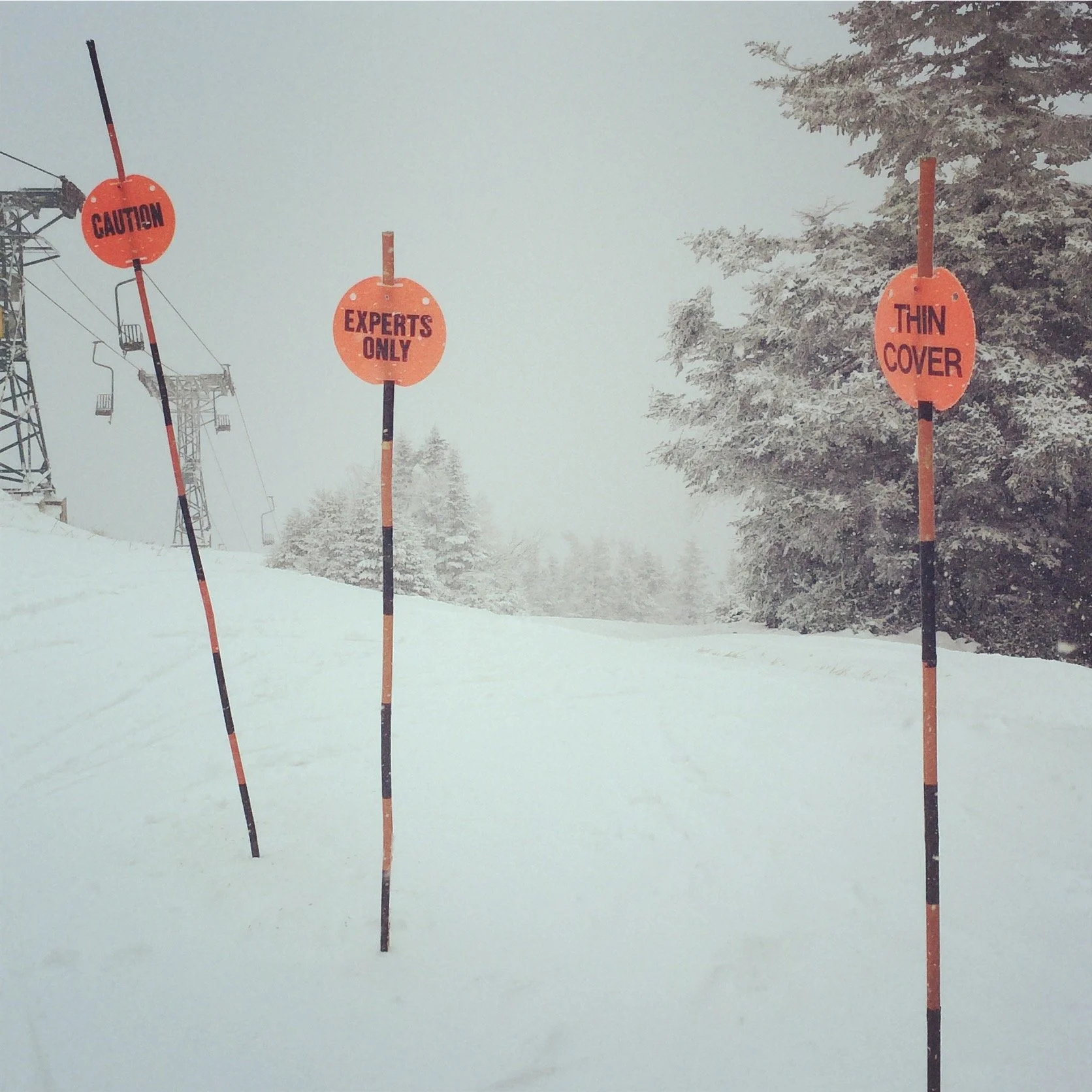
Retailers are doing their part by tackling these challenges head on. They’re negotiating with their vendor brands, testifying to state officials, talking to our congressional delegation, and repeatedly making the case for tariff relief to anyone that will listen.
So how can we do our part? What can we do to help them?
The hard truth is that Vermont is not going to be able to bake sale its way out of this. We can’t slap a few more ‘buy local’ stickers on our Subarus and hope it’s all going to get better by the time our friends come home for Christmas. It’s time for us to do more than make an occasional, feel-good purchase at a local store. It’s time for a permanent mind shift in how we think about local businesses, and how we value their role as economic cornerstones of our communities.
It’s time to recognize that as literally everything else outside the walls of Vermont retailers has become more expensive, it's even more critical to focus on where our money goes and to whom. It’s time to embrace the fact that who owns a business matters just as much as what that business sells, as money spent with owners from elsewhere builds a future for those other people in those other places, not here.
“Vermonters tend to think that they buy local because they stroll through the farmers market to pick up a few things. Nothing wrong with that in any way. But when it comes to so many things in life, people have become accustomed to shopping from home, from an enormous selection of products. Most often at lower cost than one can find from their local store,” ” said Hal Ellms of Pinnacle Outdoor Group, an outdoor industry sales representative who works directly with outdoor retailers throughout Vermont and the region. “People appreciate having local businesses, and for many, I suspect this makes up part of why they live in Vermont. It makes it cool, creates a vibe, it’s local. But they buy their bikes, shoes, clothing, skis and more from online businesses based thousands of miles away. It’s as if they don’t make the connection between their definition of local Vermont and what their actual actions are.”
Next month, as leaves start to turn and Vermont enters the finest season of them all, our local outdoor retailers will once again start stocking cozy fleece sweaters, fall hunting gear, hiking boots and wool socks, as they once again do their part to help us all enjoy autumn to its fullest. For locals and visitors alike, it’s a scene as predictable as the changing of the leaves.
But as predictability went out the window months ago for those behind the cash register, it’s on us to provide some stability of our own.
We need to think about our dollars in the same way that independent retailers do: as money from today that goes toward building the realities of tomorrow. As investments, not purchases. Investments that fill the shelves for next winter and spring, that build our roads and trails and schools, and that support the people and places we need.
Because without those investments, that future is in doubt.